All of our waste and all of our beauty
The Bluest Eye“All of our waste and all of our beauty” is a phrase for the community’s unequal relation to Pecola: people deposit what they cannot bear in themselves onto her, then treat her suffering as proof of their own goodness. Its paired images make the central reversal plain: the community’s waste is imposed on Pecola, while the beauty it appropriates was hers first.
The Phrase and Its Contrast
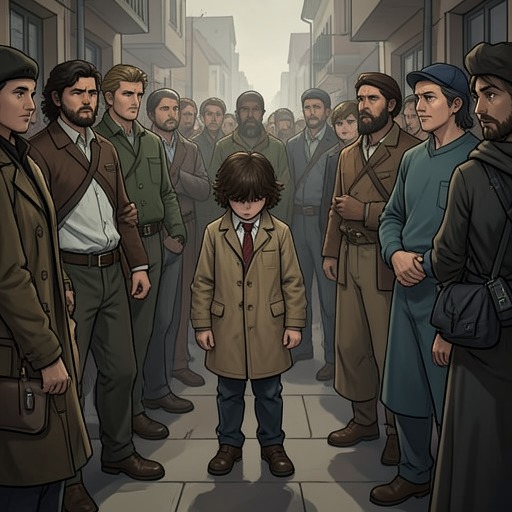
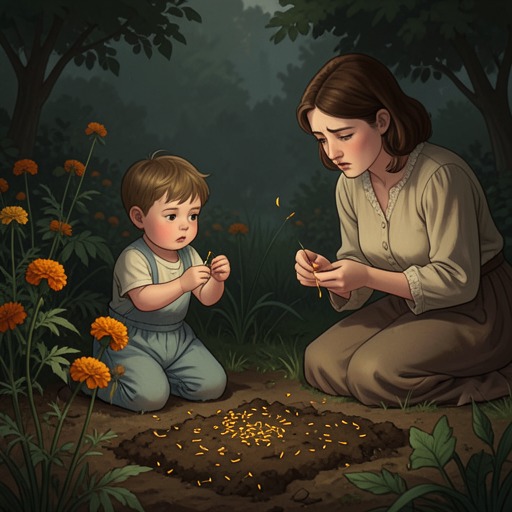
The expression appears as a sequence of linked claims rather than a single description. The community’s waste is what it “dumped on her” and what she absorbed; its beauty, by contrast, was hers before it became something she gave to others. That difference in direction matters. Harm is transferred onto Pecola, but whatever others value in her is taken up as a benefit for themselves.
The passage sets waste and beauty beside one another without making them equal halves of a neutral balance. Pecola bears the community’s refuse, while the community derives a sense of moral and personal wholeness from her. The phrase therefore describes both what is done to her and how others make that treatment serve their own self-image.
A Community Made to Feel Whole
The narrator recalls that people who knew Pecola felt wholesome after having “cleaned” themselves on her. Standing against her, they could imagine themselves beautiful; her simplicity seemed to decorate them, and her guilt appeared to sanctify them. The sequence shows how her degradation becomes a social resource: the more diminished she is made to seem, the easier it becomes for others to feel elevated.
This judgment is not confined to a single antagonist. It describes a collective habit of using Pecola as a comparison point and a receptacle for shame. The community’s sense of virtue is consequently unstable: it depends not on strength or generosity in themselves, but on setting their own lives beside a girl made to appear worse off.
The Uses of Pecola’s Vulnerability
The passage traces several forms of advantage the community draws from Pecola’s hardship. Her poverty lets others feel generous; even her waking dreams become useful to them, a way to quiet their own nightmares. Her frailty offers a surface against which people can polish their egos and build up their characters. Each benefit turns something that belongs to Pecola—her deprivation, her vulnerability, even her inner life—into material for others’ self-approval.
That exchange also implicates those who recognize what is happening. The narrator says Pecola “let” the community use her and links that allowance to her having “deserved our contempt.” The reasoning exposes the cruelty of the judgment rather than validating it: a child’s vulnerability is treated as permission to despise her. The community converts its own exploitation into an accusation against the person who bears it.
False Strength and Narrative Responsibility
The passage ends by calling the community’s apparent strength a fantasy. Its members had padded their characters with Pecola’s frailty and imagined themselves powerful by comparison, but the narrator’s collective voice acknowledges that they were not strong, only aggressive. The admission punctures the moral superiority built through the waste-and-beauty exchange: what looked like strength depended on directing judgment and harm toward someone less protected.
The first-person plural makes the indictment self-implicating. Rather than placing the act of dumping waste safely outside the narrators, the passage says “we” did it and profited from it. Its recurring contrast—what the community imposed on Pecola and what she had first possessed—therefore functions as an account of shared responsibility. The phrase’s decisive force lies in refusing to call the arrangement a mutual exchange: Pecola absorbs what others discard, while the community claims the beauty she gave and mistakes its borrowed elevation for its own.